Foundation 05
Putting
About 40% of all strokes happen on the green. Speed control and a calm, repeating stroke matter more than a perfect line.
3 min read · Published June 28, 2026 · Updated July 29, 2026
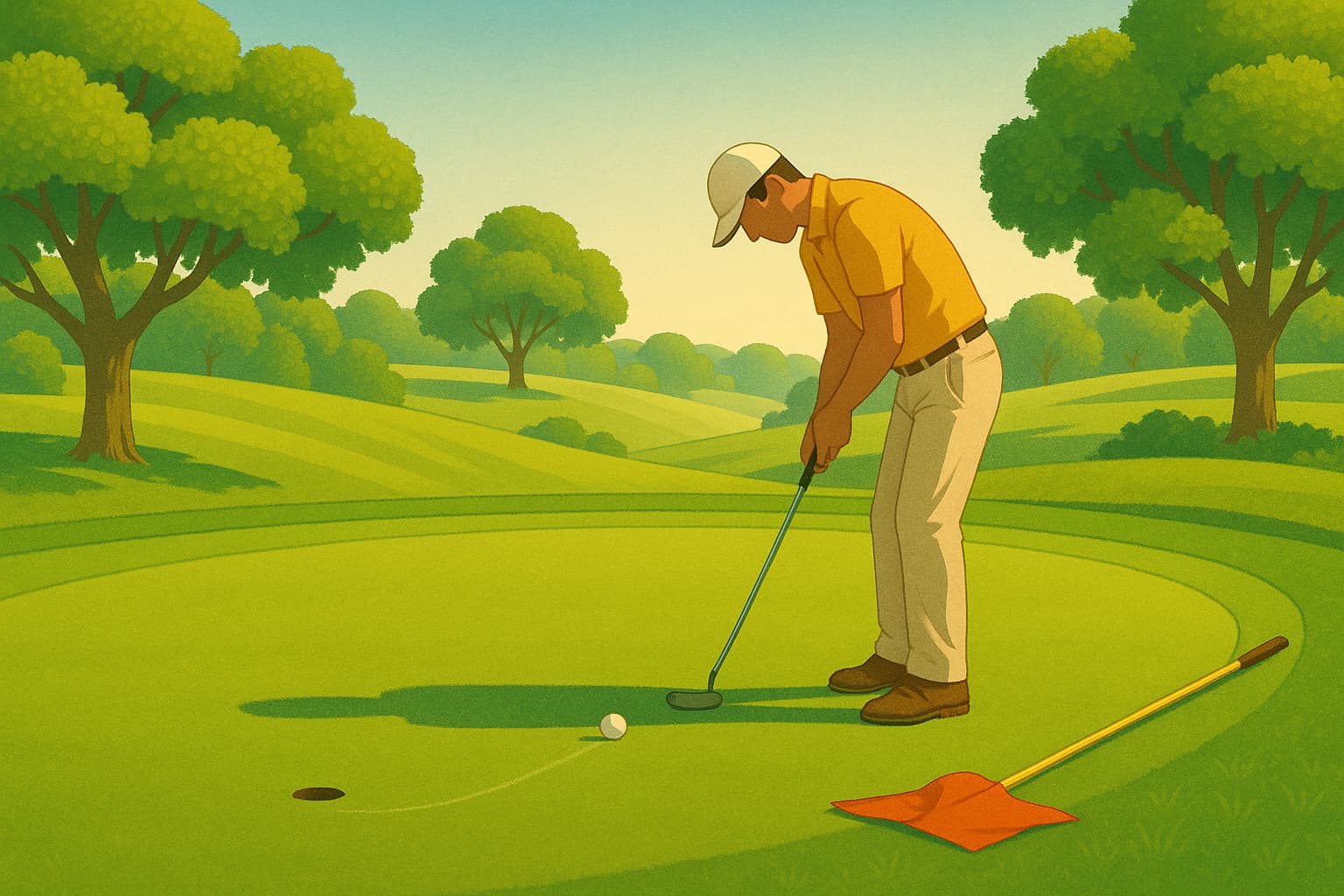
Putting accounts for roughly 40% of your strokes, and yet it's the easiest part of the game to practice — you can do it on a carpet at home. Small gains here show up on every single hole.
A stroke you can repeat
- Eyes over the ball, hands under your shoulders, gentle grip.
- Rock the shoulders like a pendulum; keep the wrists quiet.
- Equal length back and through. Let the through-stroke match the backstroke so tempo stays smooth.
Speed is king
Three-putts come from poor speed far more often than poor aim. Practice rolling putts to a fringe or a tee so the ball finishes within a foot — distance control is the skill that erases three-putts.
The 17-inch rule
Try to roll every putt so that, if it misses, it finishes about 17 inches past the hole. A ball with that pace holds its line best and never leaves a long comebacker.
Reading the green
Most beginners under-read break. Walk to the low side, look at the slope between ball and hole, and trust your first read — overthinking ruins more putts than misreads do.
You'll hear
Always strike the ball firmly so it can't break offline.
What's true
Ramming putts turns makeable ones into long comebackers. Good speed lets gravity work with the slope — most putts you miss should die into the hole, not blast past it.
A pre-putt routine that takes ten seconds
Good putters don't think more than beginners — they think the same way every time. Steal this routine:
- Read from behind the ball. Crouch, pick the line, and choose a spot a metre in front of the ball to roll over.
- One practice stroke looking at the hole. Not at the ground — at the hole. Your hands calibrate distance from your eyes, like tossing a ball underarm.
- Set the face behind the ball, one last look, go. The longer you stand over it, the more tension creeps in.
Distance drills that actually work
- The ladder. Put tees at 3, 6 and 9 paces. Roll one ball to each in turn, then back down. Miss the rhythm and you start over — it teaches feel, fast.
- The clock. Four balls in a circle one putter-length from the hole. Hole all four, move to two lengths. Short putts become boring — which is the goal.
- Leapfrog. Roll a ball, then roll the next one just past it, and the next just past that. How many can you fit inside six paces? Pure touch training.
Common errors and what they cause
Decelerating — a long backstroke with a timid strike. The ball bounces off line and dies short. Think short backstroke, accelerating through.
Flicking the wrists — adds loft and randomness. Distance control disappears. Let the shoulders move the club; the wrists just come along.
Peeking early — lifting your head to watch pulls the face open or shut. On short putts, keep your eyes down and listen for the drop.
Practice on your carpet
The floor at home is a perfect putting lab: put two coins down as a gate just wider than the ball and roll putts through it toward a table leg. If the ball passes the gate cleanly, your start line is true — and start line plus speed is the whole game. Ten quiet minutes a week beats an hour of range balls.
Key takeaways
- Putting is ~40% of strokes and the cheapest skill to practice.
- Pendulum stroke from the shoulders, quiet wrists, equal lengths.
- Speed control beats perfect aim — kill the three-putt.
- Trust your first read and commit to it.
- Same ten-second routine before every putt — and practice on the carpet.
Keep exploring
What actually matters in beginner clubs
Forgiveness, the right loft, and a half-decent fit beat brand names every time. Here's where to spend attention — and where not to.
Rules & EtiquetteScoring & par, explained
What par really means, how a hole is scored, and the names for going over or under — birdie, bogey, eagle and the rest.